
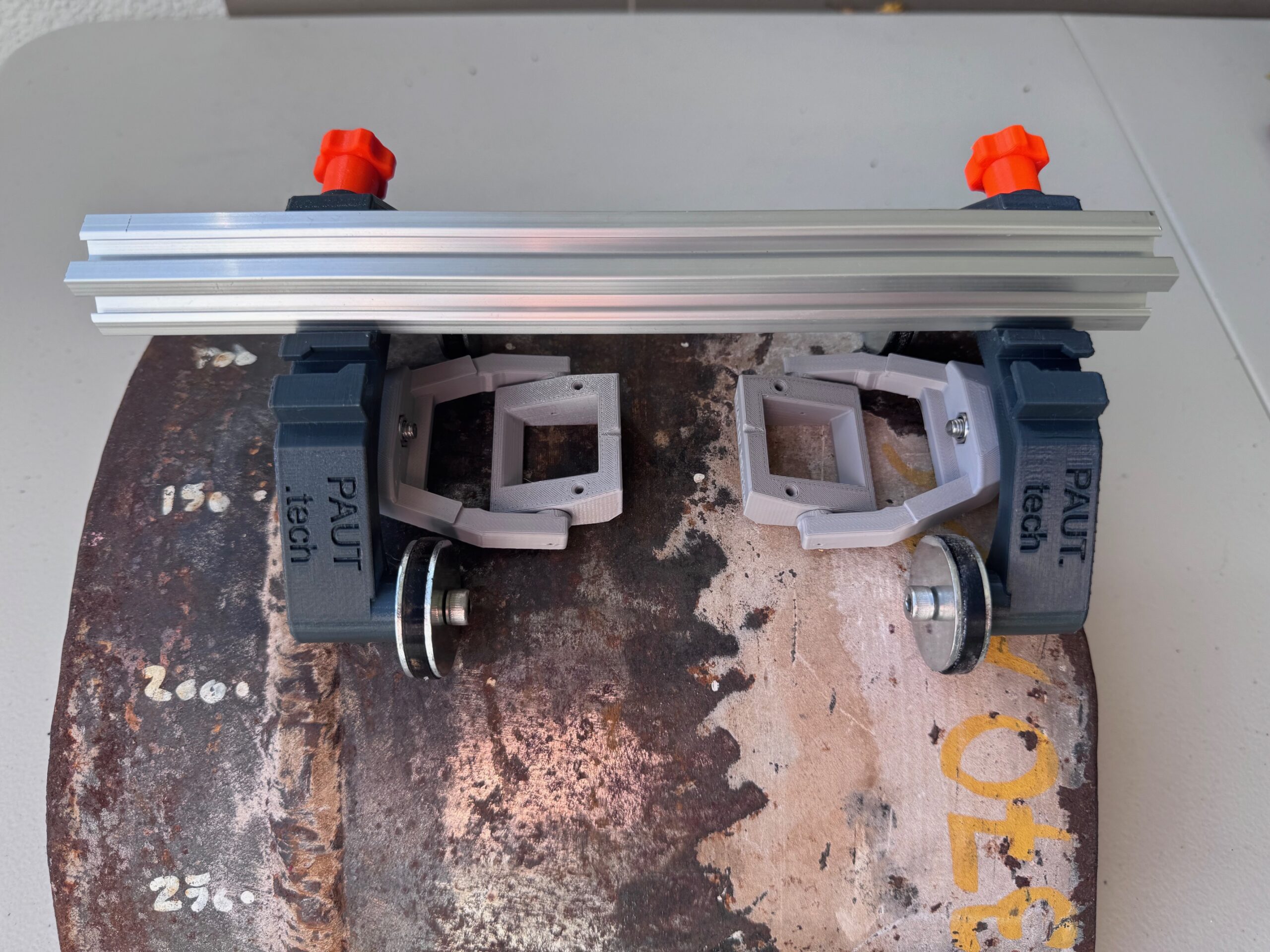

The job usually goes sideways when one scanner has to do everything. It gets rebuilt for a pipe job on Monday, reset for a weld on Tuesday, then pulled apart again for corrosion mapping by the end of the week. That is where the idea of an affordable PAUT scanner starts to matter - not as a cheaper box for the sake of it, but as a practical way to keep inspection work moving.
For most NDT teams, scanner cost is only part of the problem. The bigger issue is capacity. If one premium scanner is tied up on a shutdown, in pieces on the bench, or wearing out because it is covering every application, the rest of the workflow slows down with it. A more affordable scanner changes that equation when it is designed around actual field tasks rather than showroom specifications.
What an affordable PAUT scanner should really solve
In day-to-day inspection work, affordability is not just purchase price. It is how much time the scanner saves, how often it needs rebuilding, how well it suits a specific job, and whether you can justify owning more than one.
That matters because weld scanning, encoded manual scans, pipe inspections and corrosion work do not all place the same demands on hardware. A scanner that is acceptable across several applications can still be inefficient in all of them. There is usually a trade-off between having one highly configurable system and having several simpler, task-specific units that stay ready to go.
For owner-operators and smaller service companies, that trade-off is especially sharp. Capital budgets are tight, but deadlines are not. If a scanner is too expensive to duplicate, it often becomes a bottleneck. If it is affordable enough to deploy across multiple jobs, the business becomes more flexible straight away.
Affordable PAUT scanner does not mean compromised
There is a habit in industrial equipment markets of treating lower-cost hardware as if it must also be lower-value. In practice, that depends on where the cost has been removed.
If price is reduced by stripping away encoder reliability, poor probe mounting, awkward adjustment or weak field durability, then yes, the scanner becomes a false economy. But if cost is reduced by focusing on modular design, practical materials, simpler manufacturing and application-specific layouts, that is a different proposition.
A lot of inspectors do not need a luxury scanner. They need one that tracks properly, mounts consistently, handles site abuse reasonably well and does not waste half the morning on setup. There is a big difference between premium and fit-for-purpose.
That is why scanner selection should start with the job. Ask what the scanner must do every week, not what it might do once or twice a year. If most of your work is circumferential welds, straight-line welds or corrosion scans on repeatable geometries, a focused scanner setup will often deliver better value than an all-in-one platform.
Where cost blows out on scanner hardware
Most teams already know the obvious cost - the purchase order. The less obvious costs show up later, and they are usually the ones that hurt productivity.
The first is rebuild time. Constantly changing wheel sets, probe holders, arms and encoder positions adds labour, but it also introduces inconsistency. Small setup changes can affect scan quality, indexing and operator confidence. If the scanner has to be reconfigured too often, its flexibility becomes a liability.
The second is wear concentration. When one scanner carries every job, it absorbs all the transport damage, cable strain, wheel wear and handling fatigue. Even a well-built unit suffers when it is the only option in the workshop.
The third is lost opportunities. A scanner sitting on another site, or packed for another crew, can mean turning away work or delaying mobilisation. For service businesses, that can cost more than the difference between a premium unit and a more affordable alternative.
How to assess an affordable PAUT scanner
Start with application fit. That sounds obvious, but plenty of buying decisions are still made around general capability rather than recurring work. A scanner built for weld inspection has different priorities from one intended for corrosion mapping or pipe work. Stability, access, magnetic holding, wheel arrangement, indexing and probe placement all shift depending on the task.
Then look at modularity. Good modularity is not about endless adjustment for its own sake. It is about changing only what needs to change. Probe holders, wedges, encoder options and mounting accessories should support common field variations without turning setup into a workshop project.
Material choice matters too. In field conditions, scanner hardware gets knocked around in utes, dragged across steel, packed into tool cases and used by more than one operator. Lightweight design can be an advantage, but only if it still feels mechanically sound. A scanner does not need to be overbuilt to survive, but it does need to tolerate normal abuse.
Finally, assess replacement practicality. Consumable parts, accessories and add-ons should be straightforward to source and easy to swap. If a small failure sidelines the whole scanner for weeks, the original purchase price stops looking affordable very quickly.
Why job-specific scanners often make more sense
There is a reason many inspection businesses eventually move away from relying on one scanner platform. It is not because multi-purpose systems are useless. It is because field operations reward readiness.
A job-specific scanner can stay assembled, calibrated and familiar to the crew using it. That reduces changeover time and lowers the chance of setup errors. It also spreads wear across multiple units rather than grinding one scanner into the ground.
For companies handling both weld and corrosion work, this becomes even more practical. Different jobs often need different carriage styles, probe arrangements and movement control. Trying to force one scanner to cover both efficiently can become a daily compromise.
This is where a business like PAUT.Tech has taken a sensible position. Rather than pushing the idea that one expensive scanner must be the answer to everything, the better approach is often to use multiple affordable, fit-for-purpose scanners that each stay closer to job-ready.
What buyers should be careful about
The low end of the market has its own risks. Some scanner hardware looks acceptable in photos but falls apart under regular field use. Poor wheel tracking, inconsistent encoder output, flimsy brackets and awkward probe alignment will cost more in rework than they save upfront.
There is also the issue of hidden complexity. Some products are sold as modular, but in reality they demand too much fiddling to adapt between tasks. If an operator needs extra tools, bench time and patience every time the application changes, the design is not helping.
Support matters as well, particularly for smaller contractors without an internal engineering team. Buyers should look for equipment built by people who understand PAUT inspection practice, not just generic mechanical assemblies. A scanner should reflect an understanding of access, scan repeatability, wedge accommodation, cable routing and the way actual technicians work under time pressure.
A better way to think about value
The best buying question is not, what is the cheapest scanner available? It is, what scanner setup gives the lowest operational friction across the work we actually do?
Sometimes that will still justify a premium platform, especially in highly specialised or variable applications. But many teams are overcapitalised in scanner hardware that offers broad theoretical capability and underdelivers in daily convenience. They are paying for flexibility while losing time to reconfiguration.
An affordable PAUT scanner earns its place when it reduces those frictions. It should let crews mobilise faster, dedicate hardware to common tasks, and avoid treating every inspection like a custom build. That is the kind of affordability that improves margins without making life harder on site.
For inspection businesses trying to scale, that distinction matters. One scanner that does everything eventually becomes one scanner that holds everything up. A practical fleet of simpler, application-matched hardware often gives better coverage, less downtime and a cleaner path to growth.
If you are weighing up your next scanner purchase, start with the work that keeps your team busiest. Buy for that reality first. The right hardware is not the one with the most features on paper - it is the one your crew will actually want to pull out of the case at 6 am on a cold site start.