
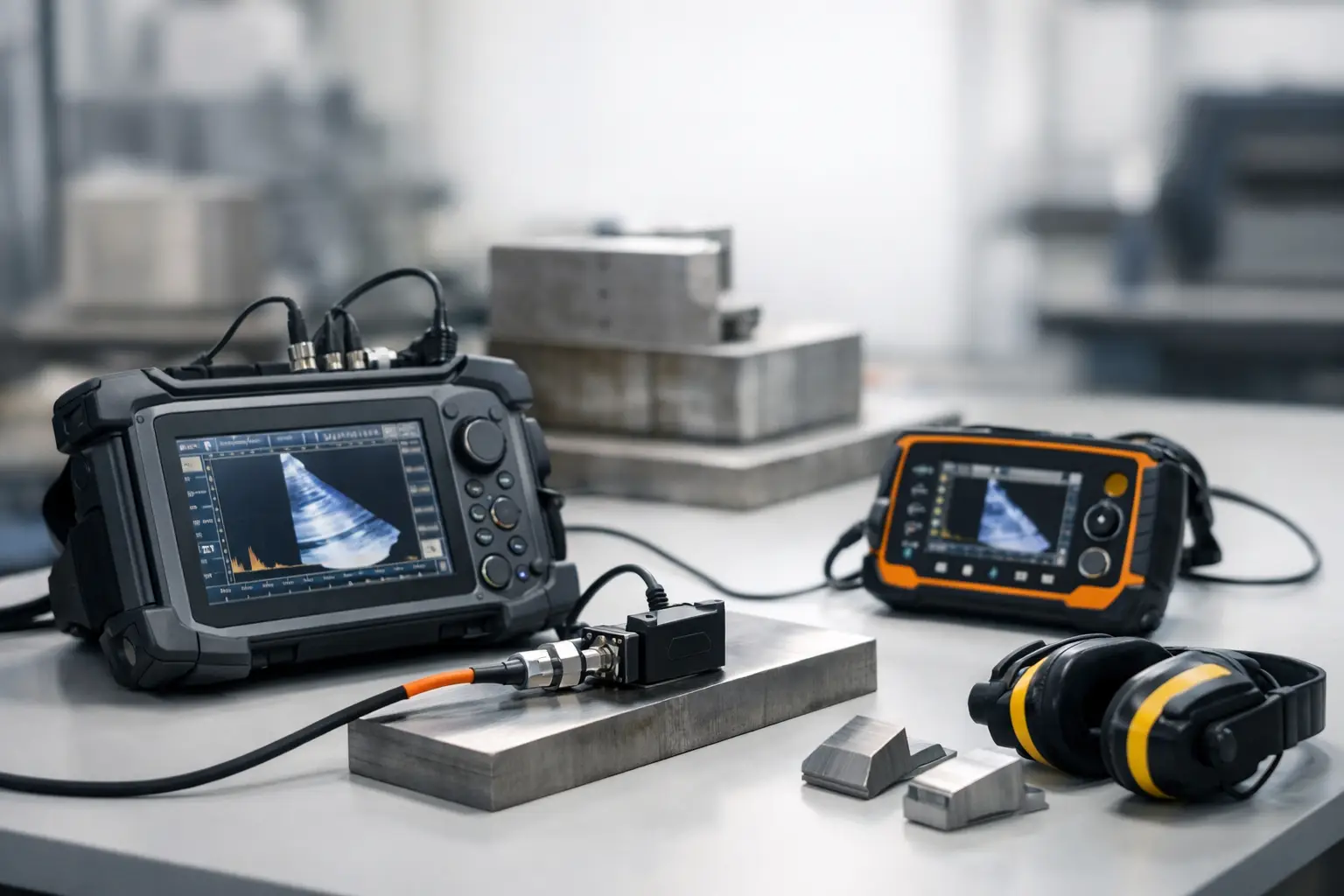

A lot of inspection teams do not have a data problem. They have a hardware bottleneck. One scanner gets rebuilt for every new weld profile, corrosion job, or access constraint, and the lost time starts chewing through the day. That is why affordable PAUT equipment options matter - not because cheap gear is the goal, but because practical gear lets you keep working.
For most NDT businesses, the real cost of scanner hardware is not the invoice alone. It is downtime between jobs, wear from constant reconfiguration, and the simple fact that one premium scanner cannot be in two places at once. If you are running a small crew or trying to scale field capacity without blowing the capital budget, the better question is not, “What is the most advanced scanner on the market?” It is, “What setup gives us the most usable coverage for the work we actually do?”
What affordable PAUT equipment options really mean
In practice, affordability in PAUT is not about buying the lowest-cost item available. It is about getting enough capability, repeatability, and durability for the inspection task without paying for hardware complexity you will rarely use.
That distinction matters. A scanner that is inexpensive but unstable on a circumferential weld is not affordable if it burns time on setup and rescans. On the other hand, a purpose-built scanner for a common job can be far more economical than a multi-purpose flagship unit that needs adapters, rebuilds, and careful handling every second day.
For most field operators, affordable PAUT equipment options fall into a few sensible categories: dedicated weld scanners, corrosion scanners, pipe scanners, encoders, wedge accessories, and adapter components that let existing instruments work harder. These are not glamorous purchases. They are the pieces that stop crews from improvising on site.
The case for task-specific scanner hardware
A common mistake is treating scanner flexibility as the same thing as scanner efficiency. They are not the same. A highly configurable platform can cover a broad range of applications, but if every new application requires stripping it down and rebuilding it, the flexibility starts costing money.
Task-specific hardware changes that equation. If your team regularly scans plate welds, pipe welds, and corrosion mapping jobs, there is usually a stronger business case for multiple simpler scanners than one expensive unit doing everything poorly or slowly. You reduce setup variability, keep your encoder arrangements consistent, and put less strain on a single piece of hardware.
This is where modular design earns its keep. You do not necessarily need a separate full system for every task, but you do need hardware that can be deployed with minimal fuss. A scanner built around one application with sensible accessory options often gives a better field result than a universal platform that tries to cover every edge case.
Where to save money without creating headaches
The safest place to save money is on over-specification. Many operators are carrying scanner capability they do not use. If a large share of your work is standard weld scanning with repeatable geometry, then high-end complexity may not return much value.
Good affordable PAUT equipment options usually focus on the mechanical side first. Stable probe carriage, reliable encoding, practical mounting, and predictable tracking matter more in day-to-day inspection than flashy extras. If the scanner runs true, holds position, and suits the surface condition, the data quality conversation gets easier.
Accessories are another area where practical buying decisions matter. Wedge holders, cable adapters, and encoder-compatible hardware can extend the usefulness of your existing kit without forcing a full system replacement. For many businesses, that is the smartest path. Build capability in steps rather than replacing everything at once.
The place not to save money is repeatability. If a scanner cannot maintain consistent movement or alignment, your apparent saving disappears into rescans, operator frustration, and weak confidence in the result.
Affordable PAUT equipment options for common inspection work
The right hardware depends on the work mix. Weld inspection crews usually benefit from scanners that are quick to set on known geometries and easy to keep consistent across repeated jobs. Corrosion mapping teams need stable travel and sensible encoder feedback over longer passes, often on less forgiving surfaces. Pipe inspection introduces another layer again, where circumference, access, and mounting method can make or break the setup.
That is why buying by application tends to outperform buying by catalogue prestige. A compact weld scanner can be the right answer for fabrication and shutdown work where speed of deployment matters. A dedicated pipe scanner may be the better spend for crews doing repeated circumferential work, especially where consistency across multiple diameters is needed. A separate corrosion scanner can free up the weld setup entirely, so one job does not disrupt another.
This practical split is often more affordable over time than asking one scanner to cover all three. It also helps with staff utilisation. One technician can keep a corrosion mapping job moving while another handles welds, instead of both waiting for the same hardware to be reconfigured.
Why 3D-printed hardware is part of the affordability discussion
There is still a tendency in some parts of the market to equate price with seriousness. That view misses what field users actually need. If the hardware is engineered for the application, prints consistently, and stands up to site use, the manufacturing method is secondary to the result.
3D-printed scanner hardware can offer a genuine cost advantage because it reduces production overhead and supports more application-specific designs. That makes it easier to supply practical tools for narrower jobs without forcing premium pricing onto every component. For inspection businesses, the benefit is straightforward: more usable scanner options, lower replacement cost when parts wear, and less reluctance to maintain multiple setups.
Of course, material choice and design quality still matter. Not every printed part belongs in an industrial inspection environment. The point is not that every printed component is automatically good value. The point is that modern manufacturing can produce sensible, field-ready hardware at a price that better fits real inspection economics.
How to judge value before you buy
Start with your last twenty jobs, not your most unusual one. Look at how often you changed scanner configuration, how long setup took, and where your crew lost time. Most businesses already know the answer. It is usually the same handful of applications causing the same delays.
Then look at duplication pressure. If one scanner is constantly booked, borrowed, or rebuilt, you do not have enough hardware coverage for your current workload. That is an operational issue, not a luxury issue. The right response may be a second simpler scanner rather than another premium all-rounder.
It also helps to think in terms of cost per deployable job. A lower-cost scanner that can stay assembled and ready may generate more value than a more expensive unit with broader theoretical capability. Job readiness is what counts in the field.
When assessing options, ask practical questions. How quickly can it be set up? How well does it suit your probe and wedge arrangements? Can it handle the surface and geometry you inspect most? Is encoder performance reliable? Can your technicians use it without reinventing the process every time?
Those are better buying filters than brand prestige alone.
A sensible equipment strategy for growing inspection teams
For owner-operators and smaller NDT businesses, the strongest strategy is often staged expansion. Buy for the work that pays regularly, then add hardware that removes the next biggest bottleneck. That might mean starting with a dedicated weld scanner and encoder setup, then adding a corrosion scanner once utilisation justifies it.
For larger service providers, the same logic still applies. Standardising a few fit-for-purpose scanner types across crews can simplify training, reduce rebuild time, and spread wear across multiple assets. It can also make mobilisation easier because teams know exactly which hardware goes to which task.
This is the practical end of affordable PAUT equipment options. It is not about chasing the cheapest setup on paper. It is about building a scanner fleet that matches the jobs, keeps technicians moving, and avoids tying your entire operation to one expensive mechanical platform.
At PAUT.Tech, that thinking sits behind the idea of practical alternatives rather than luxury hardware. For many inspection teams, the smartest investment is not one scanner that can theoretically do everything. It is having the right scanner ready when the job starts.
If your current kit is spending more time on the bench being reworked than on the asset collecting data, the next equipment decision should probably be driven by workflow, not catalogue prestige.