
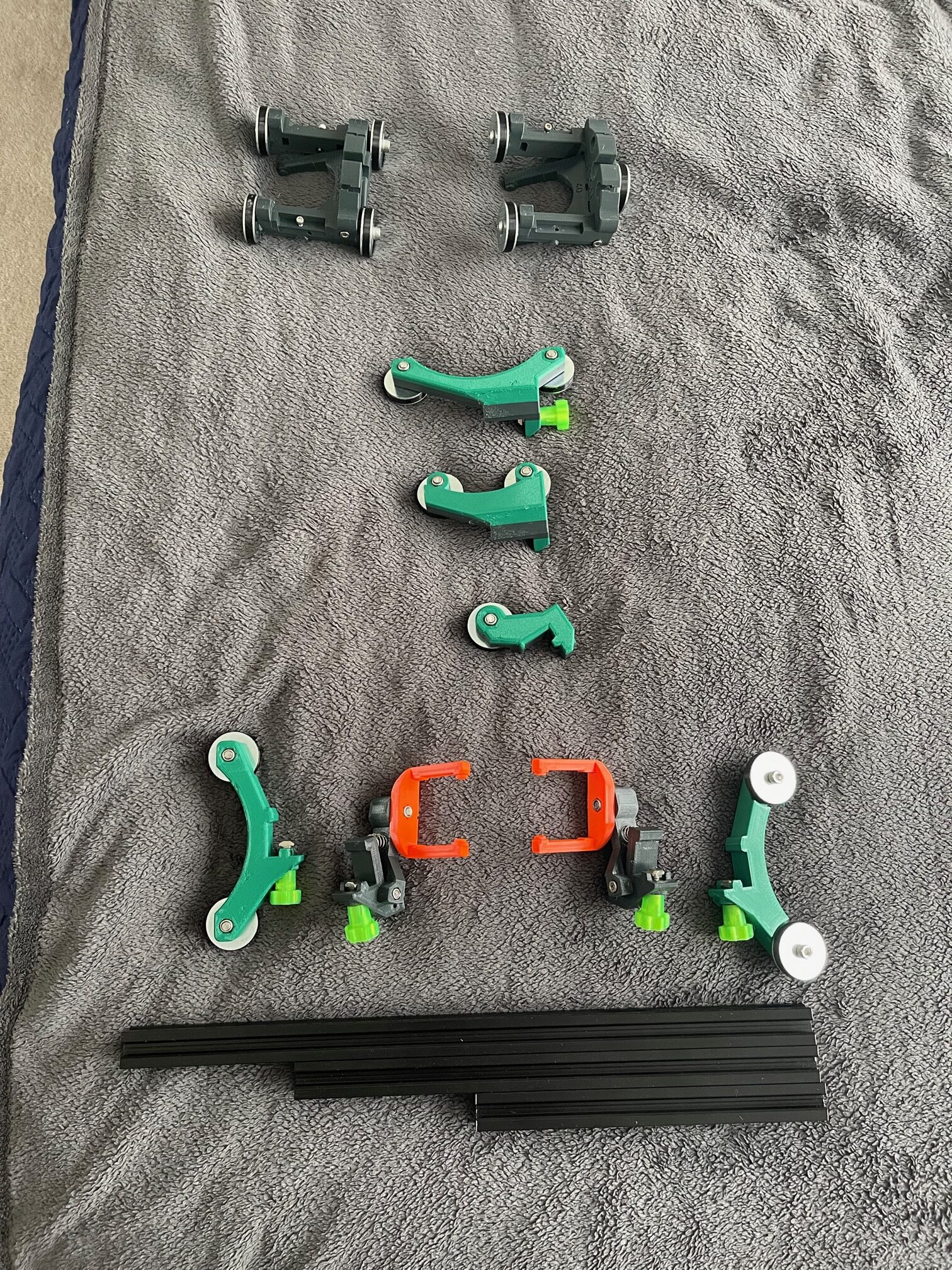

A scanner fleet scaling case study is rarely about buying more equipment for the sake of it. It is about removing the point where one scanner, one encoder set or one technician’s rebuild time holds up an entire inspection programme. For small and mid-sized NDT businesses, that bottleneck often appears well before the team considers itself ‘large’.
A typical week can include a structural weld package, a corrosion mapping scope, a pipe weld repair and an urgent shutdown call-out. If every job depends on the same premium scanner being stripped down, reconfigured and checked before it can leave the workshop, the scanner becomes the limiting resource. The issue is not probe availability or PAUT instrument capability. It is hardware availability in the right configuration, at the right time.
This representative case study looks at how an inspection contractor can scale capacity by moving from one highly utilised multi-purpose scanner to a practical fleet of task-specific units.
The starting point: one scanner doing every job
The contractor in this scenario had a capable PAUT instrument, experienced technicians and a steady mix of fabrication and maintenance work. Its scanning hardware, however, was centred on one adaptable scanner platform. It was used for encoded weld scans during the week, then rebuilt for pipe work, corrosion mapping or narrow-access applications as jobs changed.
On paper, the arrangement made sense. One scanner had lower upfront cost than several. In practice, the team was paying for that saving in workshop time, scheduling pressure and avoidable wear.
A changeover was not just a matter of swapping a wedge. It involved changing rails, brackets, probe holders, encoder arrangements and travel geometry, then checking alignment and motion before deployment. A technician might complete the rebuild quickly, but it still interrupted preparation for the next job. If a rush job arrived while the scanner was configured elsewhere, someone had to decide which client waited.
The operational consequences were familiar:
- Planned work was scheduled around scanner availability rather than technician availability.
- Field teams carried extra components to cover possible changes on site.
- Rebuilds increased the chance of missing hardware, poor alignment or damaged fittings.
- The highest-value scanner was exposed to every job, including work that did not need its full capability.
None of these problems is solved by asking technicians to work faster. They are fleet design problems.
Scanner fleet scaling case study: changing the operating model
Rather than replacing the existing scanner with a more expensive all-purpose unit, the contractor mapped its actual job types over six months. The exercise was simple: identify recurring scanning tasks, how often they overlapped, and which setups consumed the most rebuild time.
Four patterns stood out. The team had repeat fabrication weld work on flat plate, regular small-diameter pipe inspections, periodic corrosion mapping and intermittent jobs where access and quick positioning mattered more than complex mechanics.
The decision was to retain the original scanner for applications where its range was genuinely required, then add purpose-built hardware for the repeat work. The resulting fleet was not a collection of identical scanners. It was a set of working configurations that could stay assembled and ready.
One unit was allocated to encoded plate weld scanning. A second was set up for pipe weld work within the diameter range the contractor saw most often. A compact solution was kept for localised corrosion and awkward-access work. Dedicated wedges, encoder leads and mounting accessories were stored with each scanner rather than shared loosely across every kit.
This approach does require discipline. A fleet only saves time if each unit has a defined role, a known configuration and a clear pre-start check. Otherwise, the business simply creates more gear to manage.
Why purpose-built does not mean inflexible
The aim was not to make every scanner incapable of doing anything else. It was to stop treating every job as though it required a full rebuild from first principles.
A plate weld scanner can still accommodate different probe and wedge combinations within its intended geometry. A pipe scanner may cover a practical range of diameters with the correct adjustment. The useful question is not whether one scanner can theoretically complete every inspection. It is whether it can be put on the job quickly, repeatably and without consuming the setup time needed elsewhere.
For a contractor with a varied workload, modular hardware matters. It allows targeted changes without turning a ready-to-use scanner into a pile of parts on the workshop bench.
What changed once scanners were available in parallel
The immediate gain was not simply faster scanning. It was parallel preparation. While one technician mobilised for a fabrication weld scope, another could prepare a pipe inspection without waiting for hardware to return, be cleaned and be rebuilt.
That changed quoting and scheduling behaviour. The contractor could accept overlapping work with more confidence, particularly short-duration jobs that had previously been difficult to fit around a committed scanner. Urgent work no longer automatically displaced planned work.
The second gain was consistency. When a scanner remains assembled for a recurring task, technicians become familiar with its setup, travel path and usual checks. Probe position, encoder direction and cable routing are less likely to be improvised under time pressure. That does not replace procedure or calibration verification, but it reduces unnecessary variation before those controls begin.
Wear was also distributed more sensibly. Instead of using the most complex scanner on every task, the team used equipment matched to the job. Components saw fewer unnecessary rebuild cycles, and the original system was reserved for applications where its flexibility added real value.
The capital cost question
Buying several scanners can sound more expensive than buying one premium system. The upfront comparison is valid, but it is incomplete.
A single high-cost scanner can be efficient where work is occasional, job types are narrow, and one experienced technician performs most of the scanning. In that situation, a larger fleet may sit idle and create unnecessary maintenance and storage requirements.
The calculation changes when jobs overlap or when the business repeatedly loses time rebuilding the same hardware. The real cost then includes technician hours, delayed mobilisation, missed short-notice opportunities, freight pressure and the risk that a schedule slips because one key component is unavailable.
It also depends on how the business earns revenue. A contractor billing for field inspection may value a second ready-to-go scanner because it enables another crew to mobilise. A fabrication shop with fixed internal work may value it because production is less likely to wait for an inspection setup change. The right fleet size is tied to utilisation and workflow, not to an arbitrary number of scanners.
Building a fleet without creating a maintenance problem
Scaling should happen in stages. Start with the configuration that causes the most rebuilds or blocks the most profitable work. For many teams, that is a dedicated pipe scanner or a separate plate weld setup. Track how often it is used, how much preparation time it removes and whether it allows jobs to run concurrently.
Standardise where it makes sense. Keep connector types, encoder conventions, probe mounting approaches and spare hardware as consistent as practical. Label each kit for its intended application and keep a short configuration record with it. A technician should be able to see what belongs with a scanner before loading the ute, not discover a missing adapter at site.
Each scanner still needs inspection and functional checks. Encoders need verification, moving parts need attention, and 3D-printed components should be assessed for condition before critical work. Practical equipment is not disposable equipment. It must be maintained according to the work environment and the consequence of failure.
PAUT.Tech approaches fleet scaling from this operational view: affordable, modular scanner hardware can give inspection teams more working options without forcing every application through one expensive platform.
A better question before the next equipment purchase
Before purchasing another scanner, ask where the current one spends its time. If it is scanning, the utilisation may be healthy. If it is waiting in transit, being rebuilt for the next application or held back as a contingency because no alternative exists, the constraint is clearer.
The most useful fleet is not the biggest one. It is the one that lets skilled inspectors arrive with equipment already suited to the job, complete the required scan with confidence, and leave the next crew without a hardware bottleneck.